In an age where nearly every aspect of our lives is increasingly shaped by computational systems: how do we ensure that these systems serve human blossoming, not just human productivity? What does it mean for a society to thrive when the systems that mediate its thinking are built by a handful of corporations? Do we even agree on what human intelligence is for? What do we envision a next-generation AI could or should do that transcends human notions of intelligent thought and behavior?
These urgent questions cannot be answered by any single discipline. They belong as much to philosophers and artists as they do to engineers and computer scientists. Understanding human and artificial intelligence requires a Cognitive Science that links empirical psychology with anthropology and computation. But getting the disciplines into genuine dialogue is tough. Each discipline and practice uses different languages for the same concepts. And their translation takes time and effort that most scientific conferences and their rigid formatting refuse to give us.
The scientific conference «Hybrid Minds» is designed to overcome that. We aim to create the conditions for genuine cross-disciplinary debate.
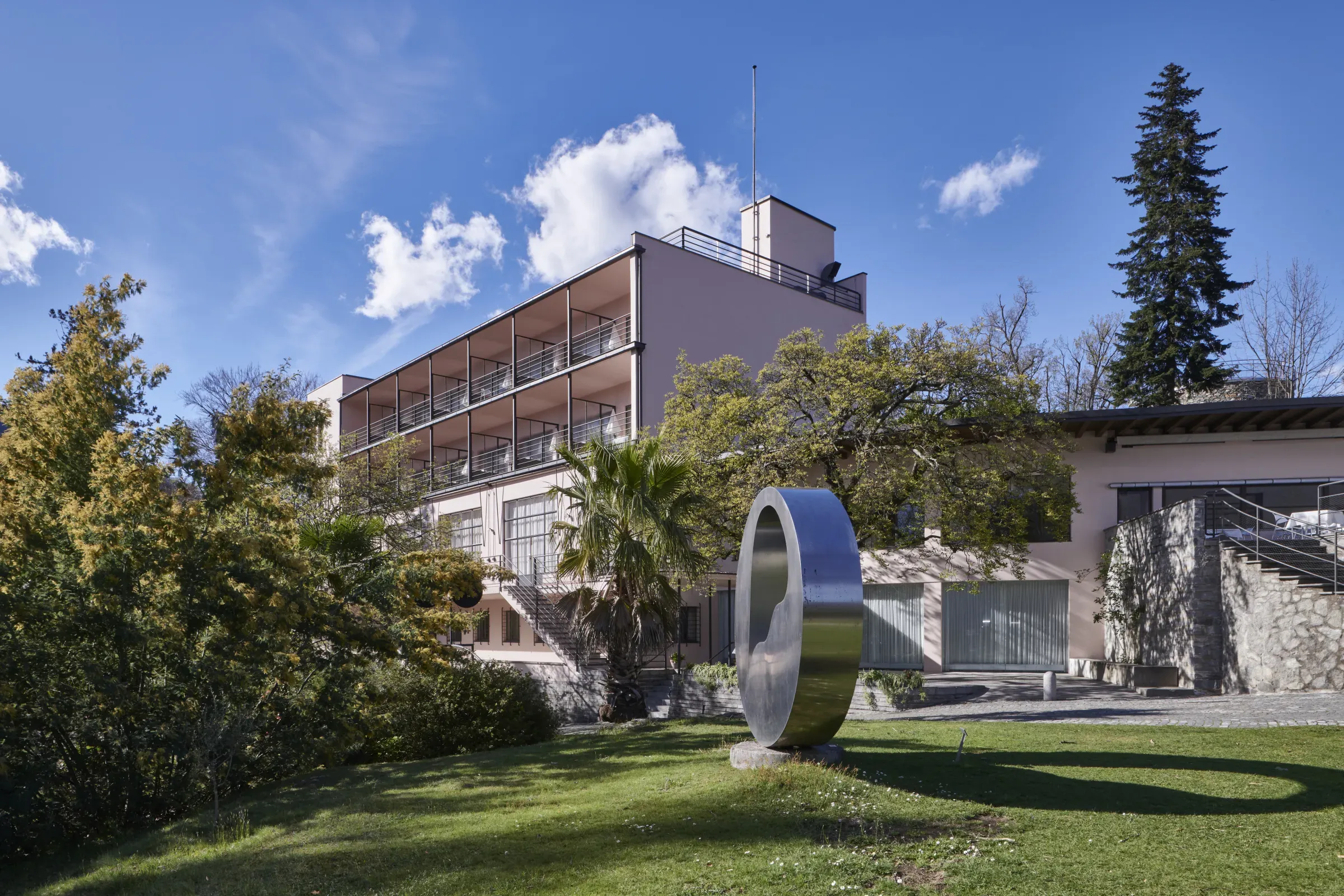

The gathering takes place in the Italian-speaking south of Switzerland, at the storied Monte Verità (“Mount Truth”) above Lago Maggiore. At the turn of the twentieth century, this hillside above Ascona became a magnet for people who believed that how you live and how you think cannot be separated: artists, dancers, and reformers arrived from across Europe to experiment with alternative ways of being together. That history of serious, sometimes eccentric, always committed intellectual experiment still inhabits the place.
Drawing on the spirit of the original Macy Conferences, where mathematicians, anthropologists, and neuroscientists freely exchanged ideas on minds and machines across disciplines, we are asking what it would take to create that kind of productive environment today. Bringing early-career and established researchers from a wide range of disciplines together in genuine intellectual exchange is one of the conference’s central commitments. We will experience an engaging mix of keynote addresses, invited talks, and poster presentations discussing the latest research in a holistic manner. Additionally, unconventional formats such as idea walks, speculative fiction workshops and evening performances will foster experiential exchange.
AI+X Summit · Zurich · 1 October 2026
What does it mean to be intelligent – and who gets to decide?
On 1 October 2026, our scientific track at the AI+X Summit in Zurich put the question behind Hybrid Minds to five researchers from five fields.
Our guests collectively explored what «intelligence» means in their own field of research – and why it matters for AI design. Through focused talks and interactive panel discussions, the audience gained surprising insights and inspiring perspectives about the future of AI.
The concepts of human and artificial «intelligence» have co-evolved conceptually since the 1950s, yet the disciplines that study each rarely sit in the same room. This track united researchers from cognitive science, neuroinformatics, history of technology, computer science and art into genuine dialogue about what «intelligence» actually means – and what is at stake when we build systems modelled on contested definitions of it.
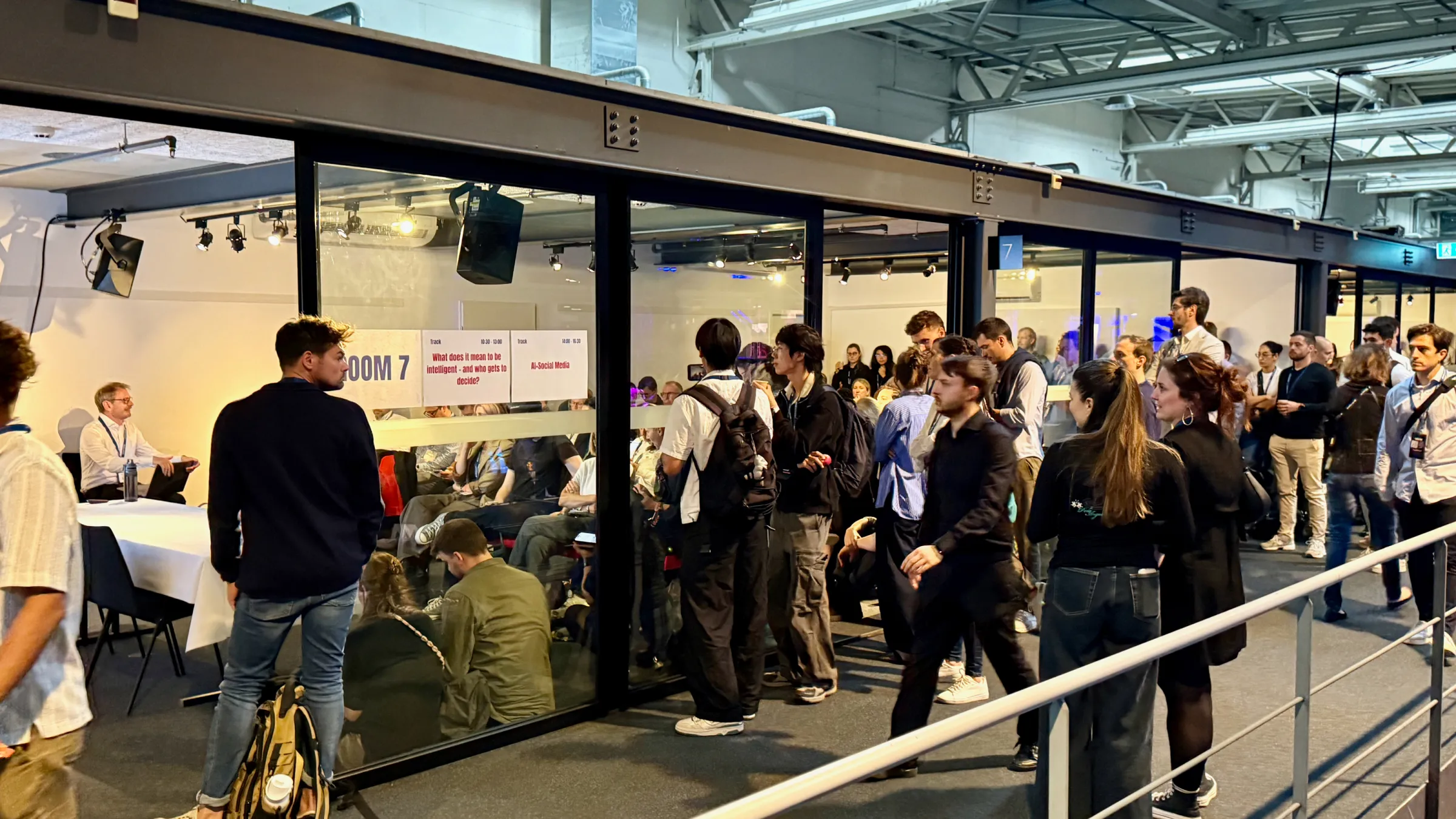
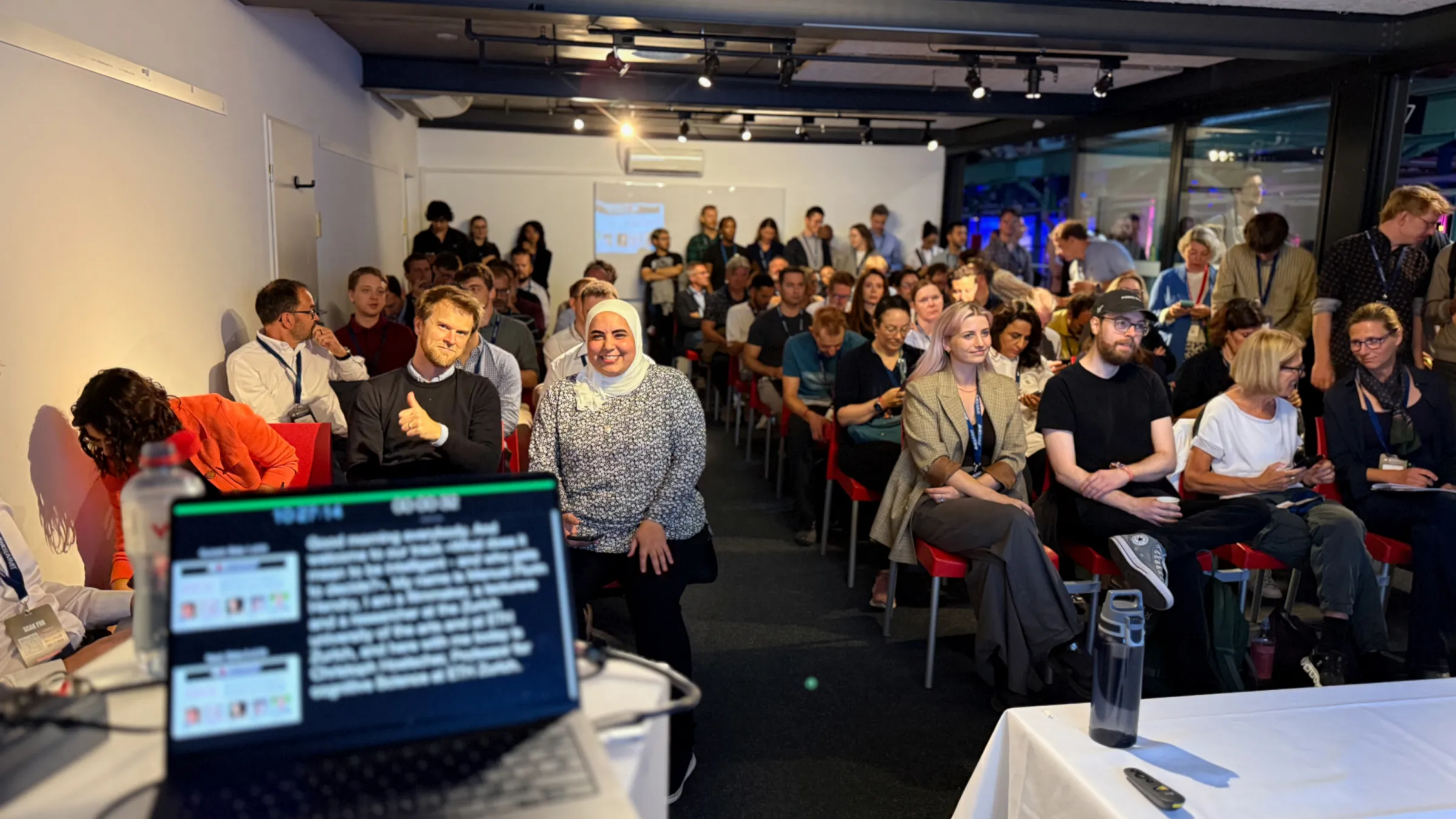
Participants heard short provocations followed by moderated cross-disciplinary discussions. The format was designed to make translation between fields productive. Audience participation was strongly encouraged.
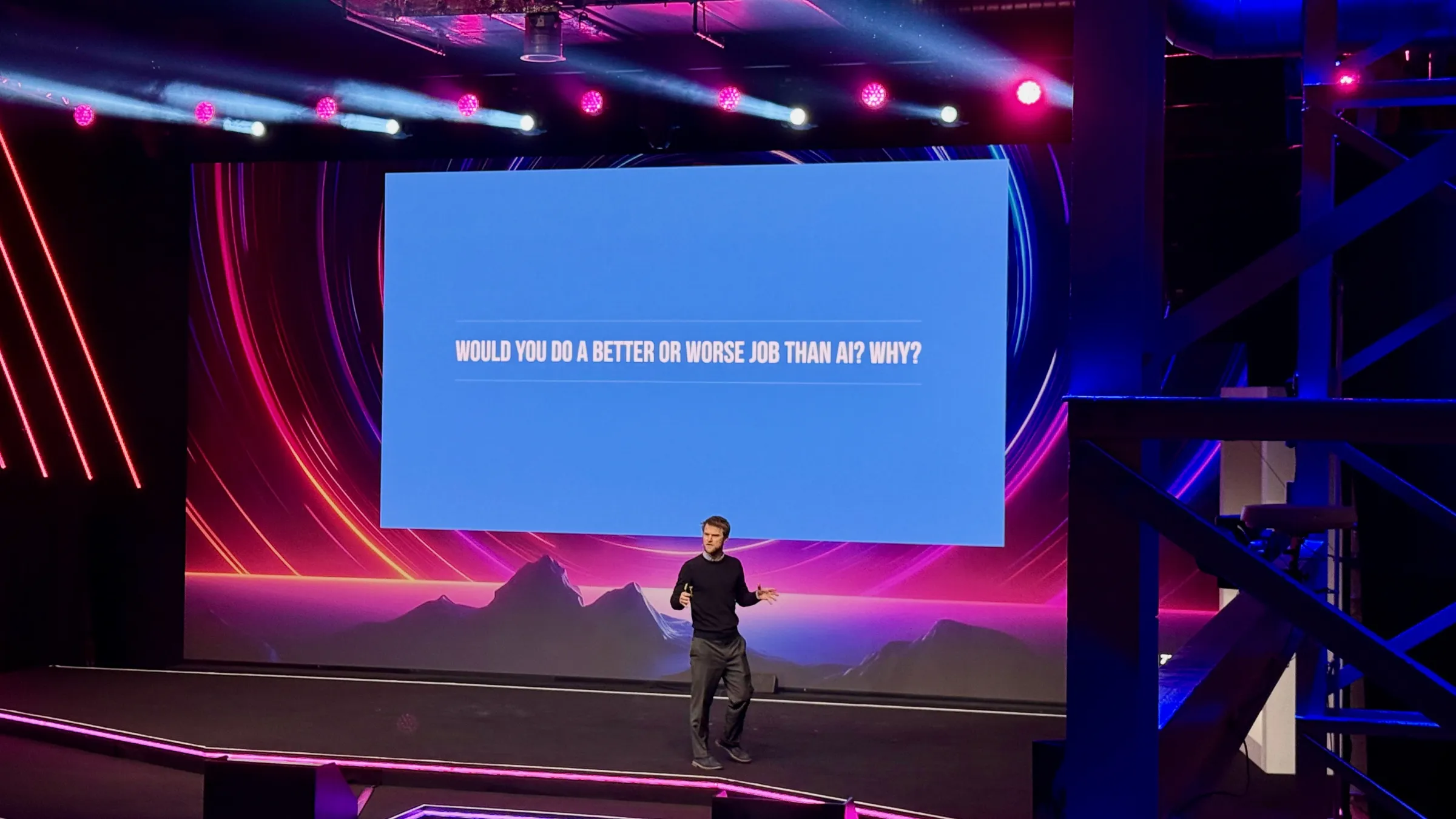
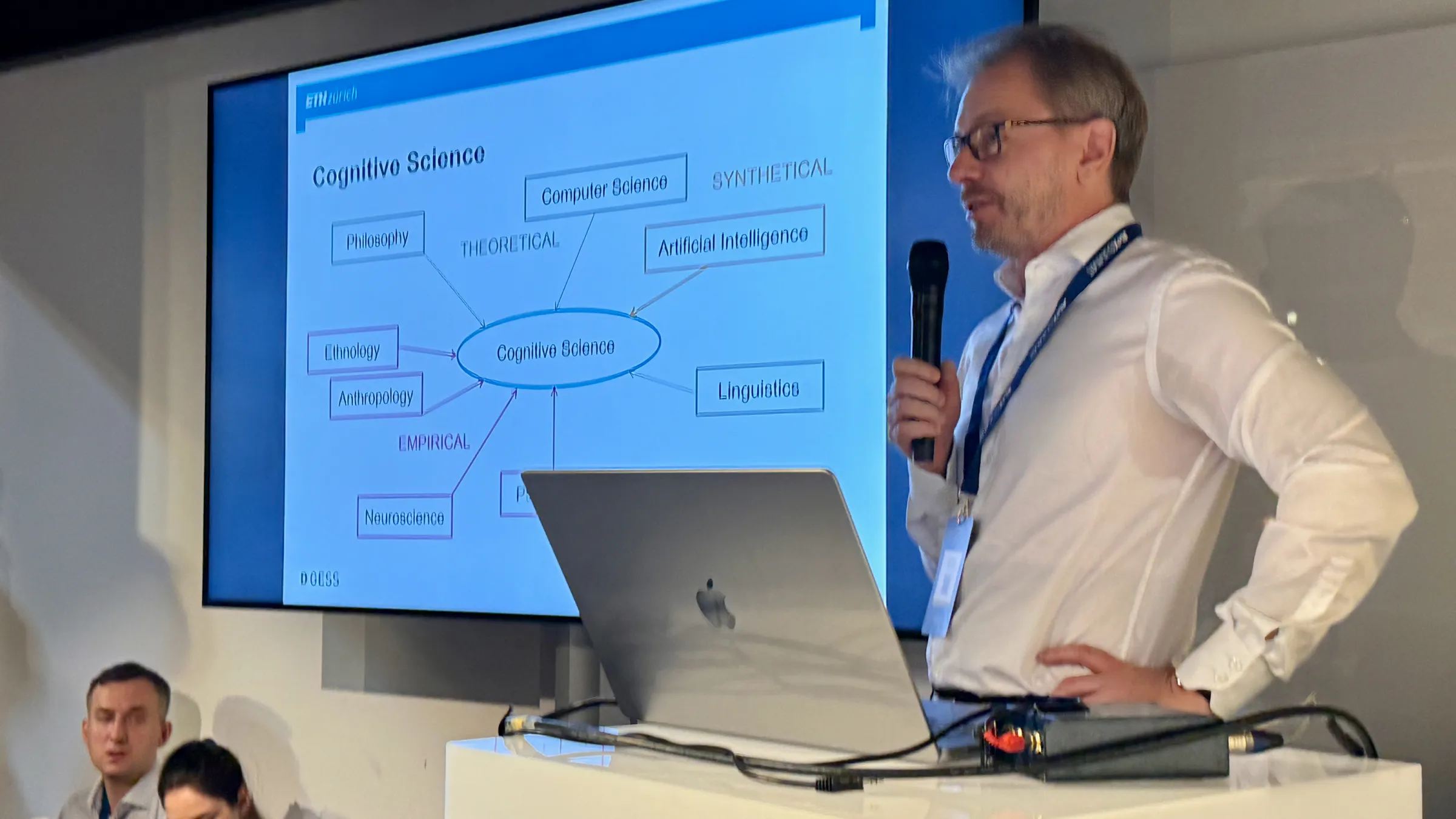
Christoph Hoelscher ETH Zurich
A Short History of Intelligence
The idea that intelligence is a mental trait you can measure objectively, and use to rank people by ability, has its origins in 19th century psychology and education research. Deep controversy remains about the source, structure and dimensions qualifying as intelligent behavior. This talk showed how our beliefs about the nature of intelligence shape how we build AI systems, and how we judge their effects on human wellbeing, behavior, and society.
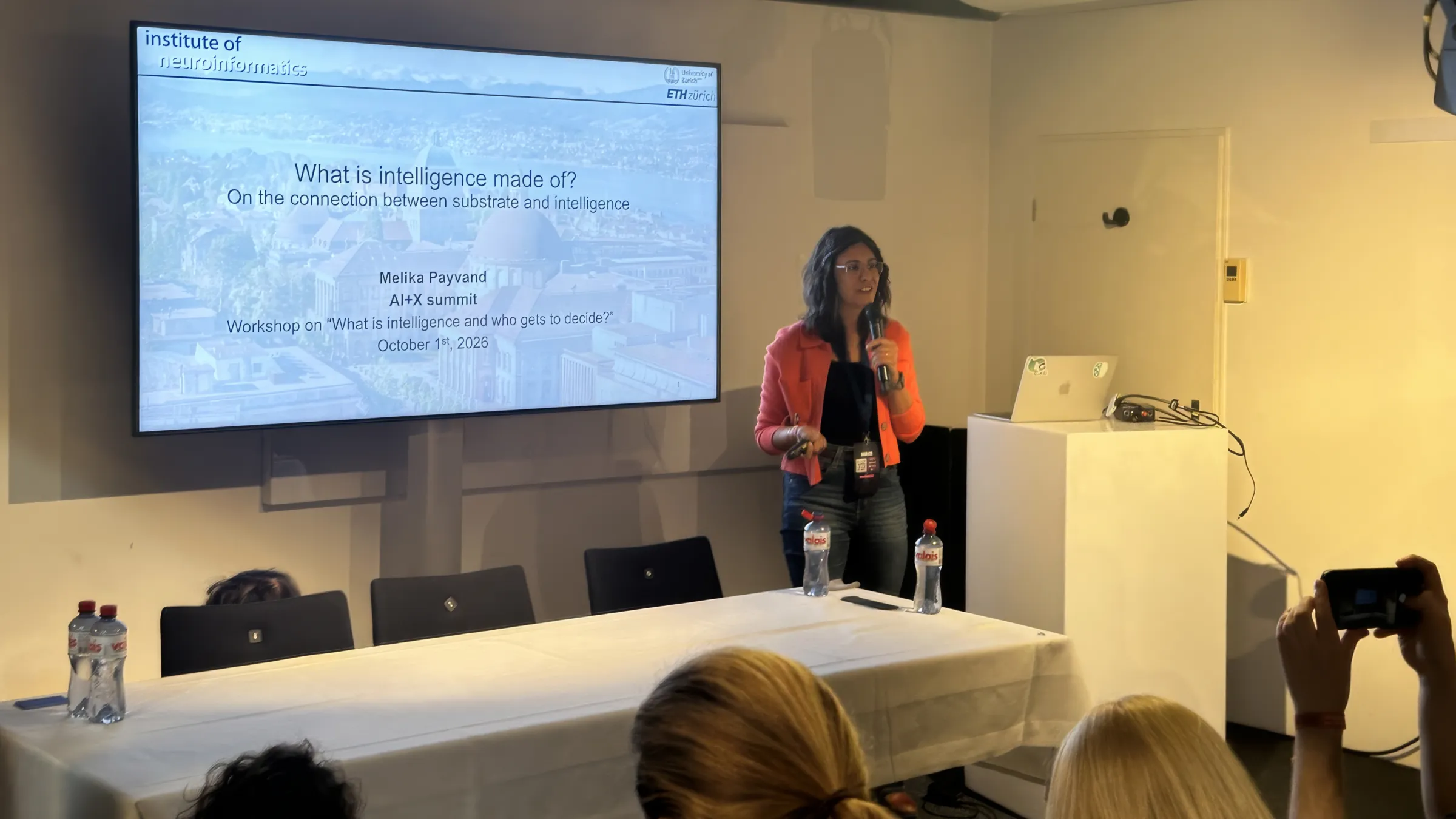
Melika Payvand University of Zurich
What Is Intelligence Made Of?
What does physical substance contribute to intelligence? Intelligence needs internal models that let a system predict and shape its future. Biology suggests that the dynamics of intelligence, its modular structure and its ability to adapt without losing function is deeply shaped by the physical substance from which it emerges. Drawing on brain-inspired hardware, this talk explored how computation changes when the material doesn't just carry the process but takes part in it, helping the system predict, adapt, and absorb damage without breaking.
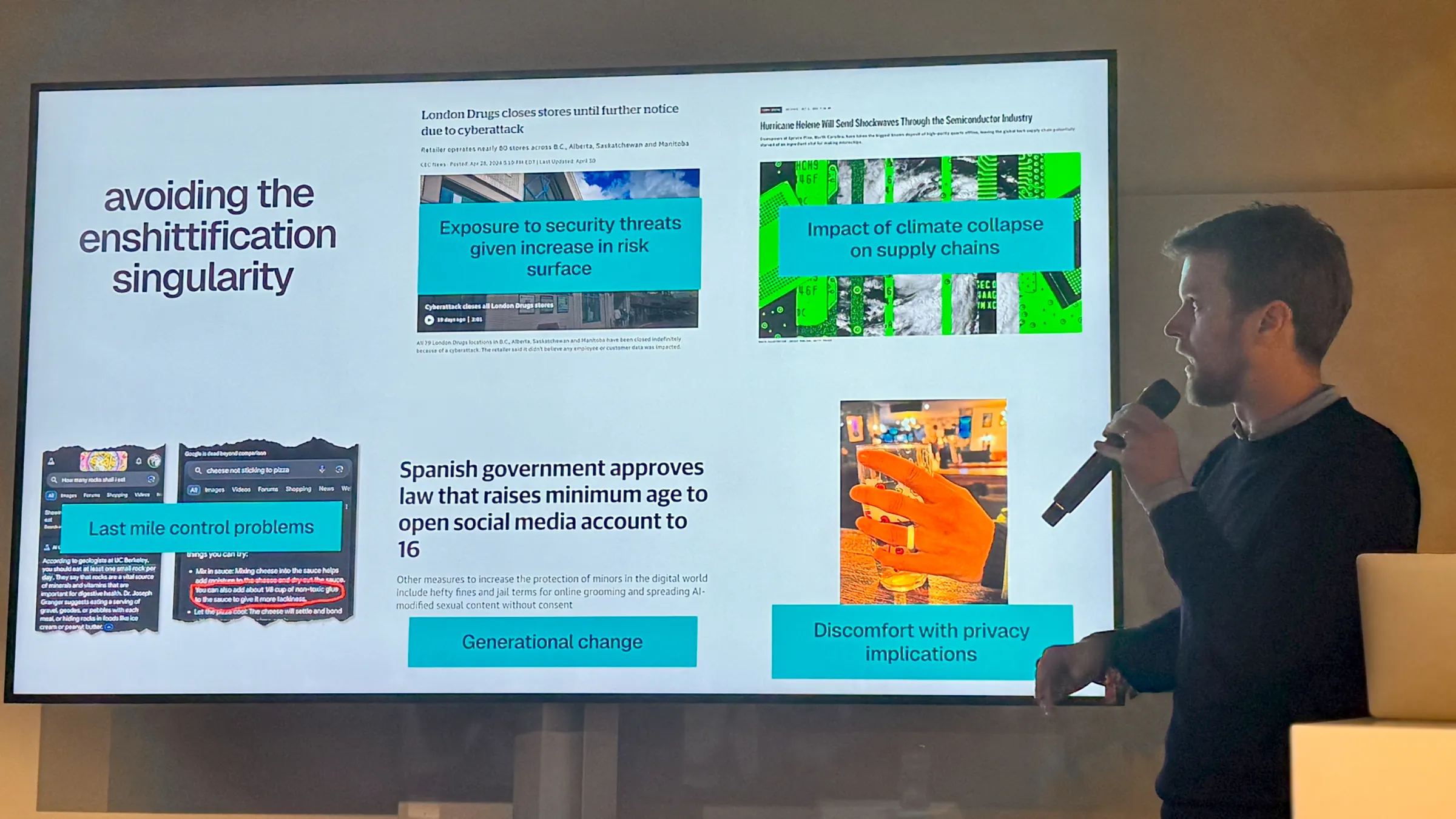
Jonnie Penn University of Cambridge
Decomputerisation as a Social Safeguard: Shifting Notions of Intelligence in the 21st Century
Not since the Y2K 'millennium bug' have leaders had reason to reckon with how deeply and risky our societies depend on digital infrastructure. In the decades ahead, climate change will test the fragile supply chains behind our computers, and chipmakers face off against citizens over scarce clean water and electricity. Against this background, this presentation examined where AI is heading. It argued that 'strategic decomputerisation' – deliberately and selectively reducing our dependence on computers – may be needed to tackle the risks.
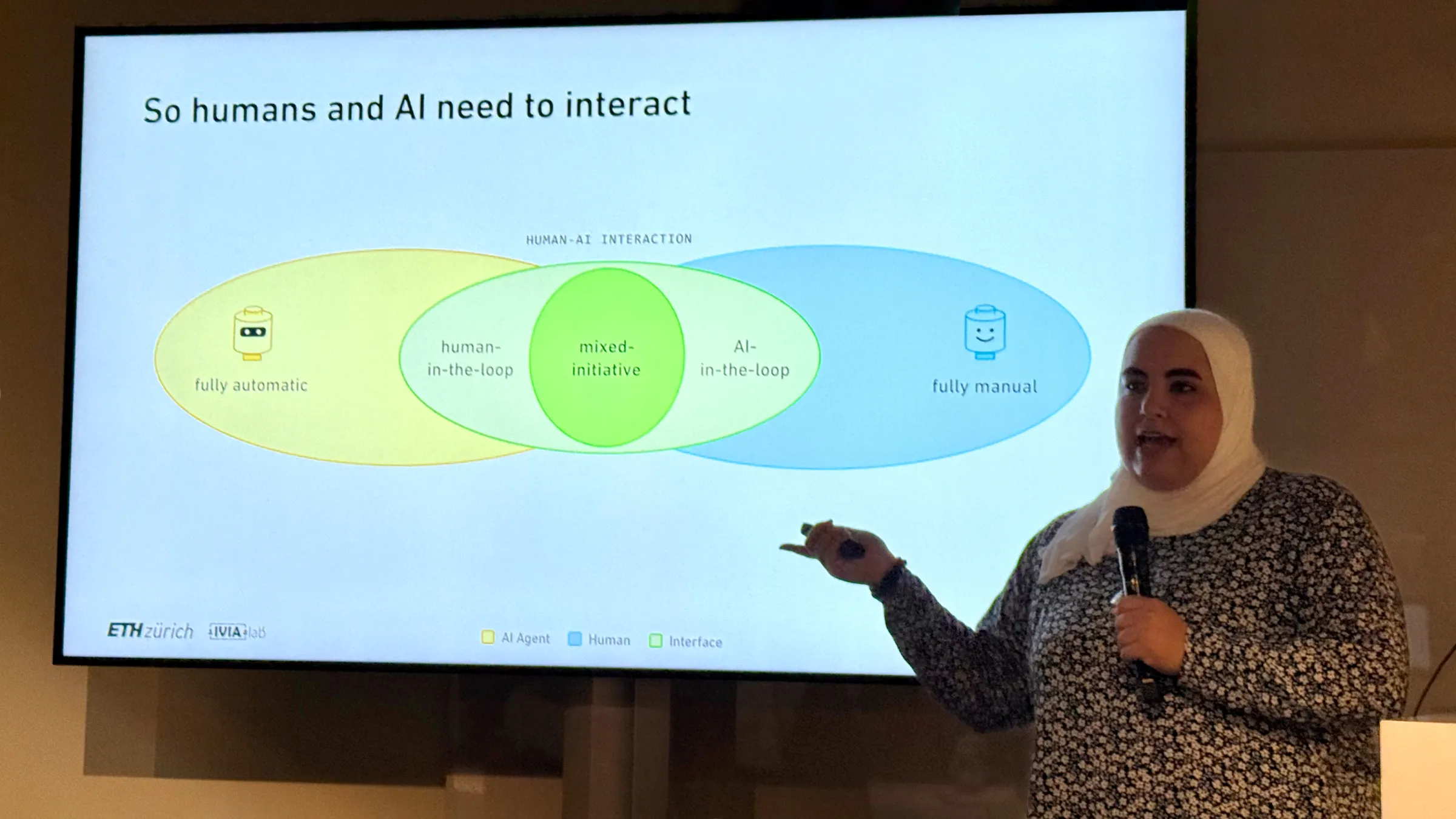
Menna El-Assady ETH Zurich
The Space Between Two Black Boxes: Finding the Right Moments for Human-AI Collaboration
AI systems promise to combine machine speed with human judgment. Whether that promise holds is decided not inside the AI itself, but in a few concrete moments where human and machine meet. Based on IVIA Lab's research, this presentation looked at three of them: when explaining an AI's reasoning actually changes what people do next, when human feedback is worth learning from, and when to hand control to the machine – or keep it. We are starting to open the black box of AI. The human one remains opaque.

Manuel Flurin Hendry Zurich University of the Arts
Artificial «Intelligence» and its Myths
Fiction in the Western Hemisphere has rehearsed the artificial human for millennia. Creatures like Talos, the Golem, Maria in Metropolis or HAL in 2001 constitute a cultural unconscious from which we draw our AI-related goals, our fears – and sometimes even our funding decks. Against the background of the presenter’s own practice with machine performance on stage and in installation, this talk presented a cartography of the artificial human in the occidental tradition, and the jagged frontier between fact and fiction.
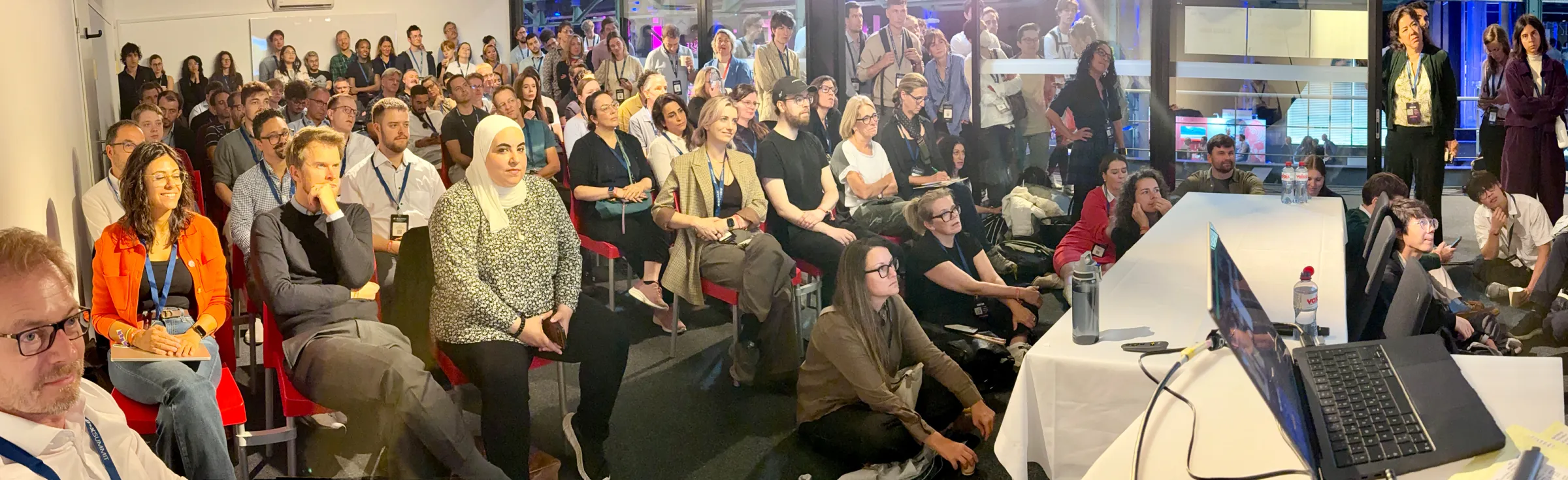
Download all photos in full resolution (ZIP, 23 MB)